
Over the past few months, much of the country has been talking about a fraternity house in Ithaca.
A former Cornell student alleges she was sexually assaulted by seven Chi Phi fraternity members during a night of heavy drinking and drug use in October 2024. She was twenty.
No criminal charges were filed at the time, and the accused men deny or dispute the allegations. New York's attorney general has since been appointed special prosecutor.
I don't know what happened in that house, but I know something about nights like that. Because I used to live them.
Thirty-eight years ago, on October 9, 1988, I took my last drink. I was twenty-three. I've counted and celebrated every year since.
When I read about Ithaca, I feel sick about what that young woman says she endured. The allegations raise urgent questions about consent, accountability, and campus safety.
But they also bring me back to a question I've spent much of my adult life thinking about - what are we really looking for when we reach for a drink?
The red Solo cup has become practically synonymous with college life. Beer pong. Flip cup. Drinking games with elaborate rules, questionable athletic ability, and an absurd amount of enthusiasm.
For many, drinking like this - and drinking in general - remain a social pleasure, something enjoyed without consequence.
For others, the same cup promises something far more complicated.
We drink and get high for all sorts of reasons - to quiet the nerves, to feel braver, to fit in or to forget. Sometimes, simply to feel less like ourselves.
And, for young people especially, alcohol and drugs can become substitutes for coping skills they haven't yet developed. The more they depend on them, the less opportunity they have to develop those skills.
Genetics and circumstances can play a role in who becomes susceptible to addiction, but no one can predict with certainty where that line might be.
I certainly couldn't. And at first, alcohol worked.
I didn't think I had a problem - I just liked drinking. I felt more comfortable, more confident, funnier. Possibly even a better dancer (although there's little evidence to support that claim).
It gave me, in a cup, everything I couldn't find in myself.
That's what makes it so seductive - it's a bad answer that works just long enough to convince you it's the right one.
Until it stops working.
The warning signs came quickly - the inability to close my eyes at night and be alone with my own thoughts, the morning-after dread, the shame.
I felt every one of them. And drank anyway, more vigorously.
Alcohol and drugs have a way of turning down the volume on good judgment, especially in young adults whose brains are still developing. Research suggests that alcohol is involved in roughly half of sexual assaults among college students, whether consumed by the perpetrator, the person assaulted, or both.
But alcohol doesn't commit assault. People do.
Being drunk is never an invitation, nor is intoxication an excuse. Responsibility belongs to the person committing the assault.
And as I've told our children more times than they'd care to remember, add alcohol and drugs to an already charged situation, and the potential for harm grows.
Here is the hardest part to admit, though.
At twenty, I knew what it was like to drink beyond good judgment and to mistake recklessness for freedom. I remember how vulnerable that could make me, and how little I understood that vulnerability at the time.
Somewhere tonight, on a campus like Cornell, a party is beginning. Most of the students there will wake up tomorrow just fine.
Some may not.
Because sometimes, one night can change the course of a life.
I don't envy colleges trying to keep young people safe while giving them freedom to grow. Rules and consequences have their place, but they can only go so far.
We spend so much time worrying about what's in the cup, and not nearly enough asking why someone reaches for it.
The cup offered temporary relief. But people helped me find what it couldn't - some even before I was ready.
There was Mrs. Egbert - my elementary school music teacher turned therapist - who tracked me down. I found her annoyingly persistent.
And, frankly, just annoying. But she never gave up.
There was a good friend who asked me to set five goals and check back in a month.
I failed to accomplish a single one. It was an uncomfortable but necessary look in the mirror.
And then there was Chris.
We sat together in metal folding chairs, in her backyard, and occasionally in diners. I was scared. She told me to keep coming.
So, I did.
She answered my calls, day or night, and never asked for anything in return.
With time, and help from others, I began to build within myself what I had once looked for in a glass.
Ease. Courage. Belonging. Peace inside my own head.
And something I hadn't even known I was missing - a sense of purpose.
Sobriety didn't just teach me how to live without alcohol. It taught me how to live.
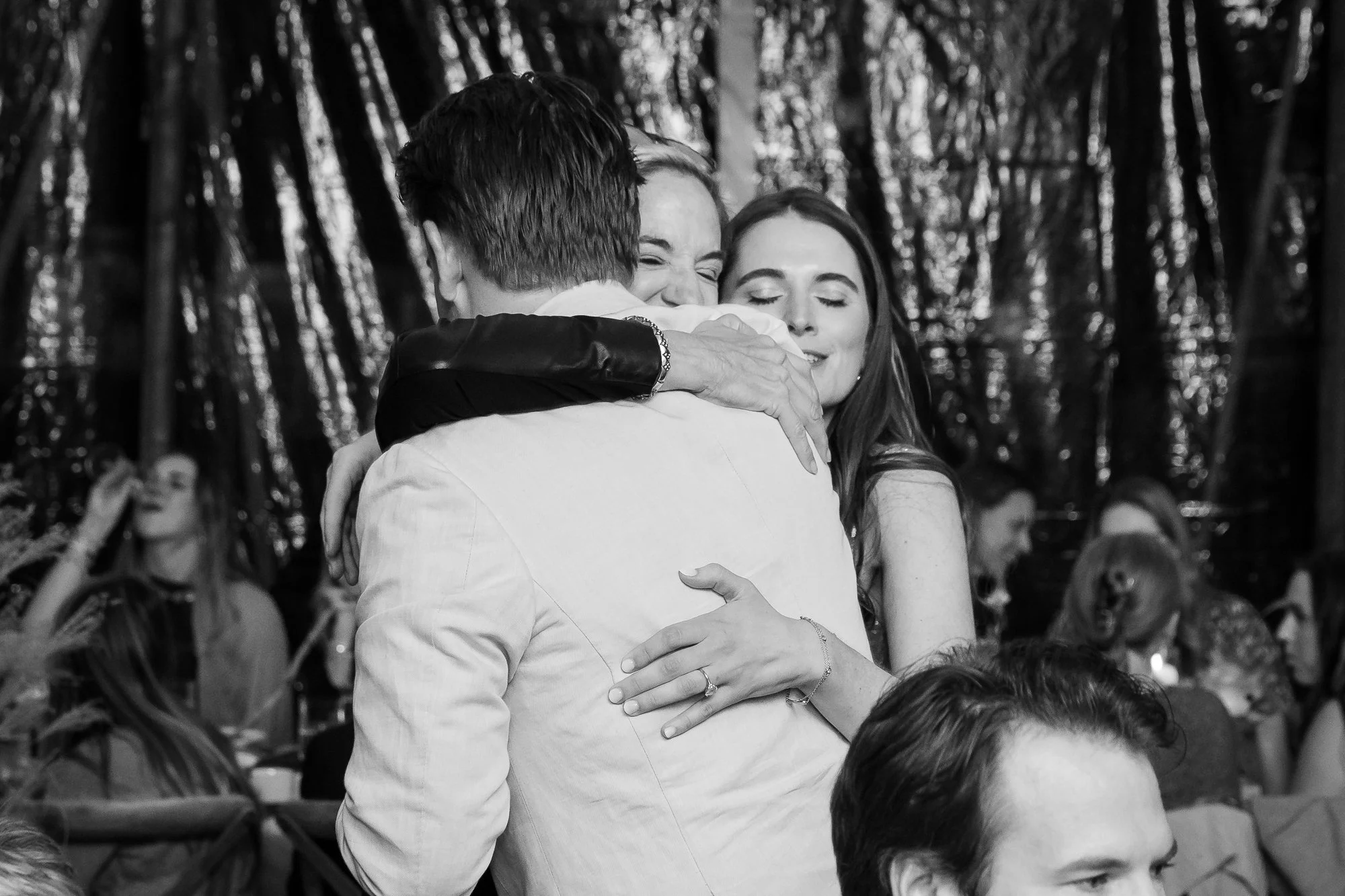
I finished school. Met my husband. Raised our children. I was there for first days of school, games, graduations - and now a wedding.
The ordinary, extraordinary privilege of being present for my own life.
And I remember all of it.
When people ask why I don't drink, I tell them I've already had my share. And probably that of a few other people.
It's a good line, and it usually gets a laugh. But the truer answer is harder to explain. It wasn't willpower alone that changed my life.
It was grace.
My path ran through church basements. Others find theirs in a therapist's office, a treatment program, or a conversation with a friend who refuses to look away.
The rooms may look different, but none of us has had to find our way alone.
Whatever your age, before you pour a drink, ask yourself what you're hoping it will give you. Pay attention to the answer.
And pay attention to each other. If someone is struggling, don't look away. If something feels wrong, it probably is.
We may not have all the answers. But we can keep asking better questions. Not just what's in the cup, but why we reach for it.
And just maybe, the most important thing we can do is show up for one another.
One day at a time.
the red solo cup
Next
Next